
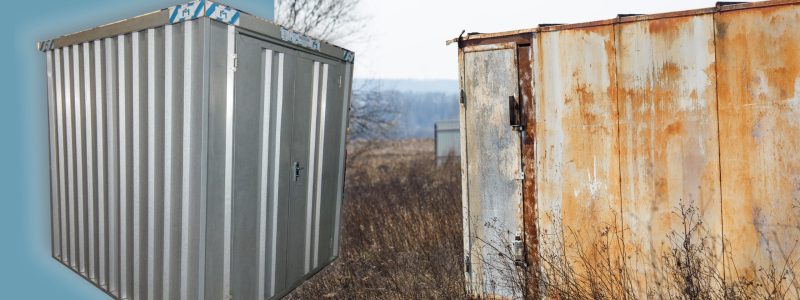
When deciding between a traditional steel box and a modern modular system in South Africa, it’s easy to get lost in the jargon. If you are weighing up modular containers vs shipping containers, this guide breaks down the pros and cons to help you decide which is right for your Johannesburg project.
Shipping Containers: The Industrial Veteran
Shipping containers (Corten steel boxes) were designed for the ocean, not necessarily for people.
Pros:
- Structural Strength: Designed to be stacked 9-high on a ship, they are incredibly tough.
- Instant Shell: You have a floor, walls, and roof ready to go the moment it’s dropped.
- “Curb Appeal”: The industrial “cargotecture” look is very trendy for cafes and pop-up shops.
Cons:
- Logistical Nightmare: Delivery requires a massive crane truck (hiab). If your site has low trees, narrow gates, or soft sand, the truck won’t be able to get in.
- Thermal Regulation: Steel is a massive heat conductor. Without expensive insulation, a container in the Gauteng sun becomes an oven.
- Fixed Dimensions: You are stuck with a width of 2.44m. This can feel cramped for offices or living spaces.
Modular Containers: The Modern Challenger
Modular units, like those from Moconsa, are purpose-built for human use—offices, storage, and accommodation.
Pros:
- Flat-Pack Logistics: This is the game-changer. They can be delivered on a standard flatbed and hand-carried to locations where a crane truck would never fit.
- Optimized Materials: Instead of old sea-rusted steel, modular units often use Aluzinc®, which is naturally corrosion-resistant and lasts for decades without the need for constant repainting.
- Internal Space: Mocon Modular containers are easily modified.
- Eco-Friendly: You aren’t “patching” an old unit with chemicals and lead-based paint; you are using precision-engineered, sustainable materials.
Cons:
- Assembly Required: Unlike a shipping container that “plonks” down, modular units require a few hours of assembly (though Mocon units are designed for easy DIY).
- Stacking Limits: While shipping containers can stack very high, most modular units are designed to be single-story.
Comparison at a Glance
| Feature | Shipping Container | Mocon Modular Container |
| Material | Corten Steel (Rust prone) | AZ150 Aluzinc® (Rust resistant) |
| Delivery | Needs a 12-ton Crane Truck | Flat-packed (Fits in a van) |
| Setup Time | Instant (if truck can reach site) | 2-4 Hours (DIY Assembly) |
| Insulation | Poor (Needs major modification) | Excellent (Designed for comfort) |
| Access | Requires wide, clear space | Fits through a standard gate |
Why Mocon Modular is the Smarter Investment in SA
In the South African context, flexibility is king.
A refurbished shipping container might seem cheaper initially, but once you add the cost of a crane truck delivery, professional rust treatment, and the loss of space from adding insulation, the price skyrockets.
Mocon Modular containers are built for the local climate. They don’t require heavy machinery, they won’t rust through, and they can be moved and reassembled as your business or family grows.